
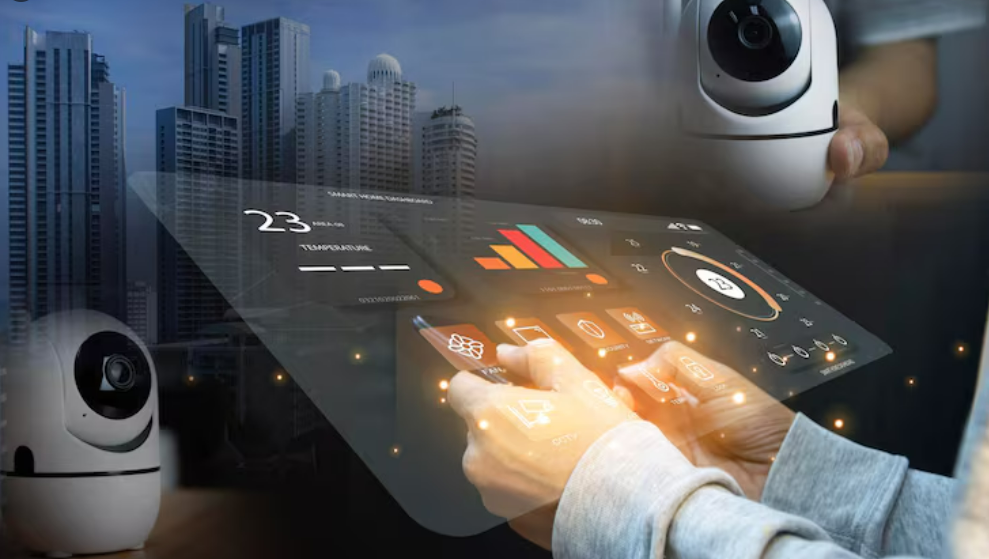
The site manager used to drive to site every morning to know what was happening.
That is not a complaint about old methods. It is a description of what used to be the only way to get reliable information from a construction site. You either went there, or you relied on someone else’s account. Neither was fast. Neither was comprehensive. Both were filtered through whoever made the journey.
Modern smart monitoring systems have changed this entirely. They do not just replace the site visit — they provide a quality and continuity of information that no amount of site visits could match. The question for construction projects today is not whether to monitor intelligently. It is how to do it well.
This guide covers what smart monitoring actually means in a construction context, how it changes the way projects are managed and documented, and what to look for when selecting and commissioning a system for your site.
What “Smart” Actually Means When You Are Talking About Construction Monitoring
The word smart gets applied to a lot of things in construction technology that are not particularly intelligent. A camera that records footage is not smart. An alarm that triggers when a sensor detects movement is not smart. These are useful tools, but they are passive — they capture data and wait for a human to interpret it.
A genuinely smart monitoring system does something with the data it captures. It analyses it, filters it, and presents actionable information rather than raw footage. The intelligence is in the layer between the sensor and the person — the processing that turns continuous data into meaningful signals.
In practical terms, this means cameras that can distinguish between a person walking through a designated area and a person walking through a restricted zone — and alert only to the second. It means analytics that identify whether activity levels are consistent with the programme. It means dashboards that synthesise data from cameras, sensors, and access systems into a single view of site status.
The shift from passive recording to active analysis is what makes monitoring genuinely useful for construction project management rather than just security. Security responds to events after they happen. Smart monitoring understands what is happening as it happens — and allows action before it becomes a problem.
The Five Things Smart Monitoring Changes on a Construction Project
Smart monitoring systems address this at every stage of the project.
Progress tracking becomes objective. Instead of relying on site diary entries, camera-based monitoring provides a visual record of activity on every part of the site every day. Discrepancies between reported and actual progress surface immediately rather than accumulating into programme drift that becomes visible only at the monthly review.
Safety compliance becomes visible. A hard hat detection system does not require a safety officer present everywhere at every moment. A system that identifies vehicles in pedestrian zones does not depend on someone noticing it. Automated compliance monitoring reduces the burden on safety personnel while increasing coverage.
Access control becomes reliable. A construction site with dozens of subcontractors, suppliers, and visitors has an access management challenge that manual sign-in systems handle poorly. Smart monitoring integrated with access control creates a real-time record of who is on site, when they arrived, and where they have been.
smart monitoring system provides an objective record of exactly what happened, from which camera angle, at precisely what time. The argument about what occurred is replaced by a review of footage. This changes the dynamic of incident management fundamentally.
Remote oversight becomes practical. A project director managing multiple sites cannot be everywhere. Smart monitoring makes genuine remote oversight possible — not just a progress report to read but actual footage and data to review. The project exists as a live information stream rather than as a series of periodic snapshots.
How Smart CCTV Systems Fit Into This Picture
The camera is the most versatile sensor on a construction site, and smart CCTV systems have evolved significantly beyond the basic recording function that most people associate with CCTV. The intelligence applied to camera footage is what distinguishes a monitoring system from a recording system.
Object detection and classification allows a smart camera system to identify not just that something is in the frame but what it is: a person, a vehicle, a piece of plant equipment. Combined with zone mapping — defining which parts of the site are accessible to which categories at which times — this creates an automated compliance layer that operates continuously without human intervention.
Behaviour analysis takes this further. A system that identifies a person moving in a way consistent with a fall, or a vehicle reversing in a pattern that suggests an access conflict, can alert before the incident rather than after it.
Time-lapse and progress analytics combine the camera’s visual record with analytical processing. Smart CCTV systems that include time-lapse functionality compress the working day into a reviewable sequence, while activity analytics identify which zones of the site were active, for how long, and with how many resources. The result is a daily progress report that is generated automatically from visual data rather than assembled from verbal reports.
Integration with Video Recording and CCTV Recording infrastructure — established Construction Site Security Cameras & CCTV systems — means that the investment in camera hardware serves multiple functions simultaneously: security, compliance monitoring, progress documentation, and evidence capture. A camera network deployed primarily for security, upgraded with smart analytics software, becomes a comprehensive site monitoring system without requiring duplicate hardware.
What Smart Monitoring Means for Programme Management
The most underappreciated value of smart monitoring systems on construction projects is their contribution to programme management — not just tracking what has been done, but providing the evidence base for what needs to happen next.
Early warning of programme drift is the most immediately valuable function. On a construction site, small delays compound. A smart monitoring system that identifies activity levels falling below the expected benchmark on a specific work package provides the early warning that allows the programme to be rebalanced before the cascade begins.
Weather and external condition documentation is highly relevant to contract management. When a delay claim is based on weather conditions, the monitoring record — showing what the site looked like on the relevant days, what equipment was operating, what access was available — provides objective evidence. Footage showing standing water across the pour zone is more compelling than a site diary entry.
Resource utilisation visibility helps project managers understand whether the resources committed by subcontractors are actually being deployed. A subcontractor with four operatives on site when the programme requires eight is a programme risk that becomes visible immediately. Addressed early, it is a conversation. Addressed at the monthly review, it is a delay.
Productivity benchmarking across projects becomes possible when monitoring data is systematically collected. Organisations operating multiple sites can compare activity levels and progress rates, identifying which approaches work better in which conditions and carrying that knowledge forward rather than rediscovering it on each new project.
Specifying a Smart Monitoring System for Your Project
The most common mistake in deploying smart monitoring systems on construction projects is treating it as a technology decision rather than a project management decision. The question is what you are trying to know, and when you need to know it.
Start with the use cases. What specific questions does the monitoring system need to answer? Progress by work package? Safety compliance in specific zones? Access management? Incident documentation? Each use case has different camera placement and analytics requirements. A system specified without clear use cases will generate data that nobody uses.
Define the coverage requirements. A single camera covering the primary work front is useful for general progress visibility. It will not provide coverage needed for safety compliance monitoring, access control, or incident investigation across a complex multi-zone site. Coverage requirements should be mapped against the site plan and specific risk zones before camera positions are finalised.
Plan for data management from the start. Storage architecture, access protocols, retention policies, and handover arrangements need to be specified before the system goes live. For projects with claims risk, retention periods should account for the typical dispute resolution window — a minimum of six years in most construction contract jurisdictions.
Integrate with existing project management workflows. Monitoring data that sits in a separate system nobody accesses is monitoring data nobody uses. The most effective deployments integrate monitoring outputs — daily activity summaries, compliance alerts, progress snapshots — into existing reporting channels so the information reaches people without requiring a separate review process.
The Sites Where Smart Monitoring Has the Highest Impact
Not all construction projects benefit equally from comprehensive smart monitoring systems. These are the project types where the investment delivers the highest return.
• Large-scale residential and commercial developments with multiple subcontractors working simultaneously — where the coordination complexity creates programme risk that monitoring data can identify early
• Projects in occupied buildings or adjacent to existing operations — where the documentation of existing conditions, access restrictions, and working hour compliance is critical for managing both safety and neighbour relations
• Projects with contractual penalty provisions or fixed completion dates — where programme management is actively adversarial and the objective monitoring record provides the evidence base for delay claims and programme adjustments
• High-security or high-value sites — where access control, materials security, and intruder detection are primary concerns that a smart camera network addresses more effectively than manual security
• Projects in remote locations or with limited client presence — where remote monitoring capability provides the oversight that physical visits cannot practically deliver
In each of these contexts, the monitoring system is a core component of the project management and risk management strategy.
The Project That Is Not Being Watched Is the Project That Surprises You
There is a version of every construction project that goes the way it was planned. The subcontractors deliver what they quoted. The programme holds. The incidents that happen are minor and well-documented.
Smart monitoring systems do not guarantee the first version. But they make the second version significantly less likely, and they make its consequences significantly less severe when it does occur.
Commission the system before the project starts. Define what it needs to monitor and why. Use the data actively. Keep the footage.
The site that nobody was watching is always the one where the surprises are worst.
The Questions Underneath the Questions
What project managers and construction clients actually ask. And what is usually behind the question that does not get said.
We already have CCTV on site for security. Does that count as smart monitoring?
Standard CCTV records footage. Smart monitoring analyses it. If your existing system alerts you when something specific happens, distinguishes designated from restricted zones, or produces daily activity summaries, you have smart monitoring. If it records footage that sits on a hard drive until someone retrieves it after an incident, you have a security recording system. In many cases, existing cameras can be upgraded by adding analytics software.
How much does a smart monitoring system add to project costs?
For a mid-sized construction project, a comprehensive smart monitoring system typically represents between 0.1% and 0.3% of total project value. The more useful comparison is the cost relative to what a single undocumented incident or a disputed delay claim costs. On most projects, the system pays for itself the first time it resolves a dispute that would otherwise have cost more to argue.
Can the monitoring system be used to manage subcontractor performance formally?
Yes, and this is one of the most commercially valuable applications. Monitoring data showing a subcontractor’s actual resource deployment, working hours, and productivity relative to their contractual commitments provides the objective basis for performance conversations. The key is referencing the monitoring programme in the subcontract terms so both parties understand the evidence basis from day one.
What about data privacy? We have workers on site who may not expect to be monitored.
Data privacy in construction monitoring follows standard workplace monitoring frameworks. Workers must be informed that monitoring is in place, the purpose must be legitimate and proportionate, and data must not be retained longer than necessary. Post notices at site entry, include disclosure in site induction materials, and have a defined retention policy.
How do we ensure the monitoring data is usable as evidence if a dispute arises?
Evidential value in monitoring footage comes from authenticity and chain of custody. Authenticity is established by metadata embedded in the footage — timestamps, camera identifiers, GPS coordinates. Chain of custody is established by a documented system for how footage is stored and who has access. Specify a professional system and document custody arrangements from day one.
Our project is in a remote location with unreliable power and connectivity. Can smart monitoring still work?
Remote and off-grid deployments are well-served by smart monitoring technology. Solar-powered systems with battery backup operate without mains power. Cellular connectivity allows footage and alerts to be transmitted without fixed network infrastructure. A well-configured remote system still delivers daily progress summaries, real-time alerts, and a complete footage archive.
At what point in the project should we commission the monitoring system?
Before the first machine arrives on site. The baseline condition of the site, adjacent properties, and access arrangements needs to be documented before any construction activity begins. That baseline settles disputes about pre-existing conditions. Systems commissioned after groundworks have started have already missed the most important documentation window.