
The UAE builds at a pace that the rest of the world watches.
A skyline that did not exist twenty years ago. Infrastructure projects that go from announcement to completion while other countries are still planning. Entire districts built and occupied within a single development cycle. The UAE’s construction industry is not just large — it is fast, complex, and operating at a scale that makes traditional documentation look inadequate.
Into this environment, drone timelapse has arrived not as a novelty but as a necessity. The elevated perspective, continuous coverage, and compressed visual narrative of months of work reduced to minutes of footage — these are capabilities that UAE construction projects now treat as standard deliverables.
This guide covers what aerial visual documentation means for UAE construction projects, why the region’s specific characteristics make it particularly suited to this technology, and how developers, contractors, and project managers are using it across the full project lifecycle.
Why UAE Construction Projects Need Aerial Documentation More Than Most
Construction projects in the UAE carry a set of characteristics that make aerial visual documentation not just useful but genuinely essential.
Scale. UAE megaprojects are genuinely mega. A mixed-use development covering several square kilometres, a highway corridor extending across an emirate — these are footprints that no ground-level camera system can cover comprehensively. The aerial perspective is the only one that captures the full project in a single frame.
Speed. The UAE’s construction pace is compressed relative to other markets. Structural frames that would take eighteen months in Europe might be completed in six months here. This speed means the documentary record needs to be continuous and dense — weekly progress photographs miss too much.
Multiple simultaneous stakeholders. UAE construction projects typically involve developers, government clients, international contractors, local subcontractors, and regulatory bodies — all of whom need to see progress, often from different countries. Aerial visual documentation provides a single authoritative record that serves all these audiences simultaneously.
Heat and visibility. The UAE’s climate creates specific visual documentation challenges. Summer temperatures make site visits difficult and reduce the window for ground-level inspection. Dust and haze reduce visibility at ground level and in standard photography. Aerial timelapse systems operating at altitude capture a cleaner, broader view that is less affected by ground-level dust and heat distortion — particularly relevant for the nine months of the year when conditions are demanding.
What Drone Timelapse Actually Captures That Fixed Cameras Cannot
Fixed time-lapse cameras are essential for continuous zone coverage — they run unattended, record every working hour, and provide the continuous documentary record that other methods cannot. Butdrone timelapse adds a dimension that fixed cameras structurally cannot provide: the comprehensive overhead perspective that shows the entire project at once.
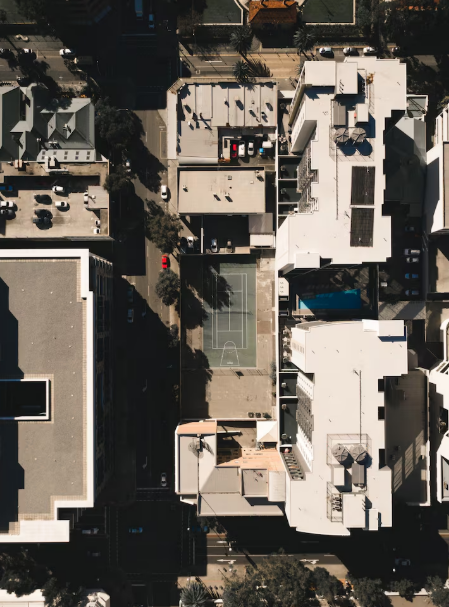
The overhead view reveals spatial relationships that ground-level footage obscures. On a large UAE mixed-use development, the relationship between tower cores, podium levels, basement structures, and external works is only legible from above. A drone pass showing all of these elements in simultaneous progress communicates the project’s status in a way that nothing else achieves.
Topographic change documentation is another aerial-specific value. The scale of earth movement in UAE projects — reclamation, grading, infrastructure corridor preparation — is only apparent from above. A drone survey showing a sand desert transformed into a formed development platform communicates the engineering achievement more compellingly than any ground-level record.
For drone timelapse construction applications in the UAE specifically, the combination of altitude and time compression creates a uniquely powerful documentation format. A project that takes two years to build can be rendered as a four-minute aerial sequence — from cleared desert to occupied development — in a format that investors and government clients can watch and genuinely understand.
How UAE Developers Are Using Aerial Documentation Across the Project Lifecycle
The most sophisticated UAE developers have moved beyond treating aerial documentation as a single deliverable — a promotional video produced at handover. They treat it as a continuous tool used throughout the project lifecycle for different purposes at different stages.
Pre-construction baseline documentation. Before any earthworks begin, a comprehensive aerial survey establishes the existing condition of the site and its surroundings. In the UAE context, this is particularly important for projects on reclaimed land or adjacent to existing infrastructure. The baseline record settles disputes about pre-existing conditions.
During construction, aerial footage serves multiple concurrent functions. Regular drone passes provide the elevated perspective for each active work front. Compiled monthly, they provide the progress record for client and government reporting. Compiled at project completion, they provide the promotional content every major UAE development uses to communicate its achievement.
Programme and claims support. UAE construction contracts carry significant contract management complexity. The aerial documentary record provides contemporaneous evidence that underpins delay claims and defence against penalty provisions — an objective record of what was happening on site, when, that neither party can credibly dispute.
Marketing and investor communication is where drone timelapse construction footage delivers its most visible value in the UAE market. International investors buying off-plan in a development they have never visited need confidence that the project is progressing as described. Quarterly drone footage updates shared with investors replace the site visit they cannot make and provide a level of transparency that written progress reports cannot match.
Regulatory Context: Flying Drones in the UAE
The UAE has a well-developed regulatory framework for drone operations that construction project teams need to understand before commissioning aerial documentation.
The General Civil Aviation Authority (GCAA) is the primary regulatory body for drone operations in the UAE. All commercial drone operations require operator certification and drone registration. In Dubai, the DCAA has additional requirements for operations within Dubai airspace. For construction projects near airports, specific airspace authorisations are required for each flight.
Aerial documentation cannot be improvised. It requires a certified operator with the appropriate licences, a registered aircraft, and pre-approved flight plans for the specific site and dates. Projects that attempt to use uncertified operators or consumer drones create regulatory exposure that outweighs any cost saving.
Integrated aerial and ground-based visual documentation programmes — where aerial documentation operations are planned alongside fixed camera systems, Video Recording and CCTV Recording infrastructure, and Construction Site Security Cameras & CCTV networks — achieve the most cost-effective coverage when commissioned as a unified programme from the outset. The logistics, regulatory approvals, and data management can be consolidated, and the different capture methods complement each other rather than duplicating effort.
The Specific Value for Different UAE Project Types
Different categories of UAE construction project extract different value from aerial documentation. These are the project types where the return is highest.
• Mega-developments and master-planned communities — where scale makes aerial documentation the only practical way to show the full project at any given moment, and where the marketing value of the progression narrative is highest
• Tall buildings and supertall towers — where aerial documentation captures the vertical progression that ground-level cameras cannot follow, and where the visual drama of the construction sequence is a genuine marketing asset
• Infrastructure projects including roads, bridges, and utilities — where the linear nature of the project requires aerial coverage to show progress across the full extent, and where government client reporting requirements are most stringent
• Waterfront and coastal developments — where the relationship between the built environment and the water is only legible from above, and where the reclamation and formation works are most visually compelling from an aerial perspective
• Industrial and logistics facilities — where the speed of construction is typically fastest and the client’s need for objective progress documentation against an accelerated programme is most acute
In each of these project types, the aerial perspective provides documentation value that no ground-level system can substitute.
Specifying Aerial Documentation for a UAE Construction Project
Getting the most from drone timelapse construction documentation in the UAE requires commissioning it correctly from the start. These are the specifications that determine whether the programme delivers the value it should.
Capture frequency. For a major UAE construction project, monthly aerial surveys are a minimum. Projects with fast construction programmes or high marketing visibility benefit from bi-weekly or weekly passes during peak phases. The capture frequency should be aligned with the project programme and the client’s reporting requirements.
Resolution and format. UAE construction projects increasingly use aerial footage for 4K promotional content as well as progress documentation. The capture specification should be agreed at commissioning. Orthomosaic outputs — high-resolution plan-view images compiled from multiple drone passes — are increasingly required for BIM integration and progress measurement against design intent.
Coverage zones. The flight path and camera orientation for each aerial pass should be planned against the site plan and phase programme. A consistent flight path maintained across all passes allows direct comparison between dates. Coverage should include the full project footprint, the site access and logistics area, and the surrounding context.
Data management and access. Aerial footage generates large data volumes. The storage arrangement, access protocols, and deliverable formats for each pass should be agreed at commissioning. For projects with international investor reporting requirements, a cloud-based platform allowing remote viewing of the latest footage is increasingly standard.
The UAE Project Without Aerial Documentation Is Missing Half Its Story
Every major UAE construction project creates a story. The transformation from empty desert or reclaimed land to a completed development is genuinely extraordinary — a visual narrative of scale, speed, and engineering that deserves to be captured as well as it can be.
A drone timelapse programme captures that story from the one perspective that does it justice — above it, with the full context of the Emirates landscape as a backdrop, at a compression that makes two years of work into four minutes of footage that anyone can watch and understand.
Commission it before the earthworks begin. Maintain it consistently throughout. Use the footage actively for the management, reporting, and investor communication purposes it was designed to serve.
The projects that do not bother discover, too late, that they built something extraordinary and have no record worthy of it.
The Questions Underneath the Questions
What UAE developers, contractors, and project teams actually ask. And the concern usually behind the question.
Do we need separate drone flights and fixed cameras, or can one system do both?
You need both, and they do different things. Fixed cameras provide continuous coverage of specific zones every working hour, every day. Drone passes provide the comprehensive aerial overview of the full project footprint at a point in time, typically weekly, bi-weekly, or monthly. On a large UAE project, the complete documentation picture requires both.
How do we handle drone operations near Dubai International Airport?
The DCAA designates flight restriction zones around Dubai International Airport covering a significant portion of the Dubai metropolitan area. Operations within these zones require a specific airspace authorisation for each flight. A certified commercial drone operator will manage this process, typically with a lead time of two to five working days per flight.
Our project is in an early phase and the site still looks like a desert. Is it worth starting drone documentation now?
Yes, and this is the most important time to start. The pre-construction baseline is the documentary foundation for everything else. It is also the opening frame of the timelapse narrative — the before image that makes the transformation at completion genuinely compelling. The footage of an empty desert that nobody bothered to capture is always the footage that is most regretted later.
Can the aerial footage be used in our marketing before the project is complete?
Yes, and in the UAE market this is one of the most commercially valuable applications. Regular aerial progress footage released quarterly to off-plan buyers gives them the confidence of seeing the project physically progressing. For projects with extended delivery timelines, this transparency is a genuine commercial differentiator.
What happens to the footage after the project is complete?
The aerial documentation archive should be formally handed over to the client and retained as part of the project record. The footage should be organised with consistent metadata — date, flight path, coverage zone — and stored in an accessible format. The raw footage archive should be retained for a minimum of six years.
We have a tight budget. Is aerial documentation the right priority, or should we invest in ground-level fixed cameras first?
It depends on the project type. For a tall building in a constrained urban site, a fixed camera programme may take priority. For a large-footprint masterplan development, drone documentation is the higher priority. For most major UAE projects, both are justified — commission them together as a single programme rather than separately.
How do we ensure consistency across a multi-year project when drone technology keeps changing?
Consistency requires a documented flight specification — a defined flight path, altitude, camera orientation, and capture format — maintained across every pass regardless of equipment or operator. What must not change is the flight path that allows direct comparison between the image captured on day one and the image captured on the day of handover.