
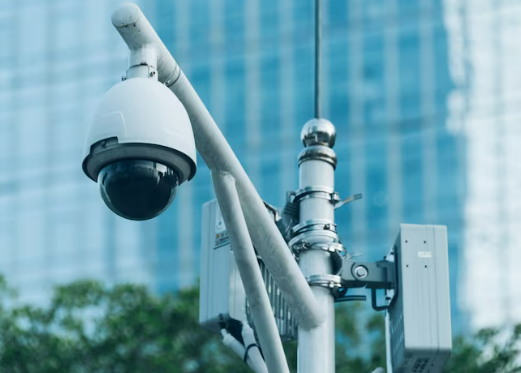
Cheap electronics come to die in the United Arab Emirates. If you buy a piece of hardware rated for international standards and mount it on a gantry crane in the middle of a July build in Abu Dhabi or Dubai, you are essentially throwing capital into a furnace. The spec sheets provided by manufacturing hubs in Europe or North America rarely account for the physical reality of a Gulf summer.
The primary issue is that standard hardware testing ignores the compounding effect of hyper-saline humidity, fine desert dust, and direct ambient heat that routinely pushes metal surfaces past 60°C. When a build stalls or a milestone dispute arises, a dead camera system leaves you completely blind. Surviving this environment requires moving past basic consumer ratings and looking at the specialized engineering needed to maintain structural documentation when the weather turns hostile.
The Mirage of the Standard IP Rating
Most project managers look at an IP66 or IP67 rating on a box and assume their investment is safe from the elements. This is a naive way to purchase site equipment. An Ingress Protection rating is determined in a climate-controlled laboratory using clean water and static dust chambers over a short period. It does not measure how a casing behaves after four months of continuous exposure to baked-on salt crusts and UV radiation that degrades industrial plastics into brittle chalk.
A professional-grade weatherproof time lapse camera relies on marine-grade aluminum or specialized polycarbonate housings designed to reflect solar radiation rather than absorb it. If your camera casing absorbs heat, the internal air expands, creating pressure that eventually warps the rubber seals. Once those seals warp by a fraction of a millimeter, the night-time humidity drops right onto the circuit board.
A standard IP rating tells you how hardware handles a laboratory clean room, not a multi-year excavation in the desert.
True survivability relies on dynamic pressure-equalization valves. These specialized vents allow the camera housing to breathe as temperatures fluctuate throughout the day, preventing moisture from being sucked inside when the air rapidly cools after sunset. Without this engineering, your high-resolution lens will fog up from the inside out, rendering your archive useless within the first season.
Extreme Heat Mitigation and Solar Engineering
When ambient temperatures hit 48°C in the shade, the temperature inside a sealed, uncooled electronics enclosure can quickly breach 75°C. At that threshold, lithium-ion batteries expand, image sensors begin producing severe digital noise, and central processors shut down to prevent permanent meltdown. You cannot run a successful jobsite archive if your hardware takes an unannounced afternoon nap during critical structural phases.
To maintain a continuous ledger of the build, a high-performance weatherproof time lapse camera employs passive cooling shields and solid-state heat sinks that draw warmth away from the sensor. These systems completely avoid internal fans, which are prone to mechanical failure when fine particulate matter bypasses the outer filters.
Battery selection is equally critical. Standard lithium batteries are a liability under the Gulf sun. Industrial setups use lithium iron phosphate (LiFePO4) chemistry or external, shaded power reservoirs paired with heavy-duty solar kits. This configuration ensures that even when the site power fluctuates, the system continues filming, processing, and uploading frames back to the cloud without interruption.
| Climate Element | Consumer Hardware Impact | Industrial Weatherproof System |
| 50°C Ambient Heat | Thermal shutdown; sensor degradation | Passive heat-sinking; high-temp components |
| Fine Desert Dust | Filter blockage; mechanical fan failure | Fanless design; sealed pressure-equalization |
| High Coastline Humidity | Internal condensation; seal warping | Breathable Gore valves; marine-grade alloys |
If your system goes offline because the battery cooked itself, you lose the continuity required for legal protection. A robust weatherproof time lapse camera keeps running through the peak heat hours, proving your subcontractors are maintaining production levels when they claim it was too hot to execute precision work.
Dust Mitigation and Optical Integrity
The desert wind does not just bring heat; it carries a abrasive mix of silica dust that acts like sandpaper on camera lenses. If your hardware uses standard glass or cheap optical plastics, the wind-blown sand will pit the outer surface within six months, turning your ultra-high-definition output into a blurry, unusable mess.
Professional systems utilize chemically hardened sapphire glass or specialized hydrophobic outer layers. This prevents fine dust from adhering to the lens geometry during humid mornings. When the dust cannot stick, the wind blows it clear rather than scratching it into the surface, maintaining a pristine view of your steelwork and structural progress.
If you do not invest in sapphire-grade optics, you are paying for an expensive sensor that is trapped behind a permanently fogged window.
Consider a major infrastructure company operating near the Khalifa Port expansion. They initially relied on standard off-the-shelf Video Recording and CCTV Recording packages to track concrete placements. Within three months, the sea spray combined with the dust from adjacent earthworks created a hard crust over the lenses, completely blinding the operations team. Replacing the hardware with a dedicated weatherproof time lapse camera featuring self-cleaning glass and specialized housing saved them thousands of dollars in manual cleaning labor and site visits.
Real-world Performance and Longevity Data
The math on equipment failure is simple but brutal. If you buy a cheap camera system and have to replace it twice over a twenty-four month commercial build, you have spent more money than if you had rented or bought a premium asset from day one. You also have a massive gap in your project timeline that can cost you dearly during a contract dispute.
Field data from active infrastructure developments in the region indicates that unhardened devices experience a component failure rate 6 to 8 times higher than specialized marine-grade equipment within the first twelve months. These failures typically manifest as corrupted memory cards, burned-out power regulators, or cloud connectivity modems that fail when internal temperatures spike during midday data transmissions.
Equipment failure is rarely a single event; it is a creeping series of missed frames that compromises your legal safety net.
Using a properly engineered weatherproof time lapse camera means your visual data stream remains uninterrupted through sandstorms, rain events, and summer highs. The internal modems are built to handle the heat of high-bandwidth uploads, pushing high-resolution frames to your off-site dashboard every ten minutes. This ensures that regardless of local site conditions, your project stakeholders have an accurate, uneditable record of progress.
Frequently Asked Questions
Can these cameras survive a direct hit from a major desert sandstorm?
Yes they are okay if they use industrial brackets and do not have a fan. The housing of a weatherproof time lapse camera is made of solid-state material. It has no moving parts that can get stuck with sand. The glass face of the camera is very hard. Does not get damaged easily. It can withstand winds with sand particles. A professional weatherproof time lapse camera is designed to work in tough conditions. It can take photos over a period. The cameras design helps it to work properly in harsh weather.
Why do standard security cameras fail in the UAE summer while timelapse units survive?
Security cameras are made for video streaming that’s on all the time and that creates a lot of heat, inside the camera on top of the heat that is already outside. Timelapse cameras are different they take still pictures at times, which means they do not get as hot inside and the camera housing can get rid of the outside heat more easily. Security cameras and timelapse cameras are used for things security cameras are always streaming video but timelapse cameras are taking still pictures of security scenes at certain times.
How often do the lenses on these cameras require manual cleaning on a dusty site?
Yes they are okay if they use industrial brackets and do not have a fan. The housing of a weatherproof time lapse camera is made of solid-state material. It has no moving parts that can get stuck with sand. The glass face of the camera is very hard. Does not get damaged easily. It can withstand winds with sand particles. A professional weatherproof time lapse camera is designed to work in tough conditions. It can take photos over a period. The cameras design helps it to work properly in harsh weather.
Do the solar panels used for these cameras degrade in the extreme heat?
Standard solar panels do lose some power when it gets really hot. That is why industrial timelapse setups use special solar panels that can handle high temperatures. These panels are made to work well even when it is very hot outside. For example even if the panels power drops by twenty percent in July it still makes than enough electricity to keep the system fully charged. Solar panels are used in these setups. They are panels.
What happens to the cloud data transmission if the local cellular network drops during a storm?
The camera has good internal storage. This storage helps the camera keep working. If the internet connection is bad because of the weather the camera will still take pictures and videos. It saves these pictures and videos on the camera itself. When the internet connection is good again the camera sends all the saved pictures and videos to the computer. The camera stores the pictures and videos in a way that keeps them secret so only the right people can see them. The camera does all of this automatically so you do not have to do anything. The camera is, like a buffer it helps the camera keep working when the internet is bad.Selecting visual documentation hardware for a Gulf project is a choice between continuous operational intelligence and constant equipment maintenance. Relying on baseline specifications meant for moderate climates will inevitably result in lost footage, corrupted files, and blind spots when you can least afford them. Deploying an authentic weatherproof time lapse camera ensures your timeline remains intact, your assets are protected, and your project history is preserved in flawless clarity.