
Anyone running a build in Dubai knows how site reporting usually goes. The daily update lands around 6pm. A few photos come through on WhatsApp, half of them blurry, most taken from whatever angle the foreman happened to be standing at. By the time somebody notices the blockwork on level four has slipped a week, it has already slipped a week.
That gap between what happens on site and what the office finds out about has been the same problem for decades. What has shifted recently is that the cameras already sitting on your towers can now tell you things, instead of just quietly filling up storage.
Cameras That Do More Than Record
A traditional site camera does one job. It grabs an image, saves it, and waits for someone to look. Nobody looks. Ask any project manager how many hours of recorded footage they have genuinely reviewed and you will usually get a laugh.
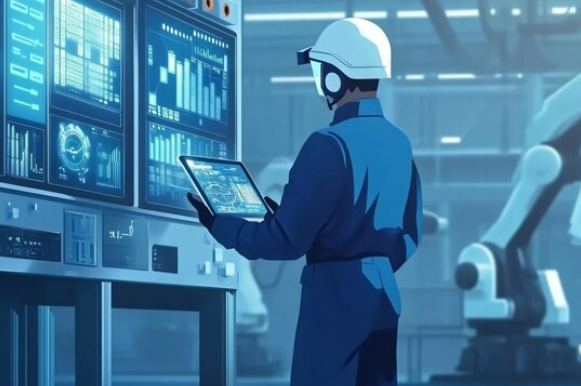
AI construction monitoring changes that arrangement. Software runs through each frame, compares it against yesterday, and flags what changed. Concrete poured at grid line 7. Tower crane idle for four hours straight. Six workers standing inside an exclusion zone at 11:40am. You stop watching footage and start receiving the parts worth your attention.
The models doing this were trained on millions of real construction images, which is the reason they finally work. Two or three years ago these systems struggled to tell rebar from scaffold in poor light. Now they manage it, most of the time.
What Artificial Intelligence in Construction Handles Day to Day
Set the buzzwords aside for a minute. Here is what is genuinely running on live sites around the UAE right now.
Progress against programme. The system compares captured images to your schedule and highlights where reality and the plan have drifted apart. Not a percentage guess from a site walk. Visual evidence, dated.
Safety. Hard hats, hi-vis, people wandering into lifting zones, someone working at height without a harness. AI construction software catches these in near real time and sends an alert to whoever needs it. Safety officers we work with say the value is less about catching people out and more about spotting the same risk repeating in the same spot every Tuesday morning.
Security worth trusting. Old motion alerts fired for stray cats, flapping plastic sheeting, and headlights from the road. Nobody trusts an alert system that cries wolf forty times a night. Newer AI construction tools classify what triggered the movement, so a person climbing your hoarding at 2am reads differently from a delivery truck reversing at the gate.
Plant and material tracking. When did the delivery arrive, how long did the excavator sit idle, is the stockpile shrinking faster than the pour schedule suggests. Small things individually. They add up across a two-year programme.
Forecasting. This is the newest piece. Feed enough historical progress data in and the system starts flagging which activities look likely to run late, weeks before a delay shows up in the report. Still imperfect. Still useful.
Why 2026 Feels Different
Three things landed at roughly the same time.
Processing moved to the camera itself. Instead of pushing enormous video files to a server for analysis, a decent unit now does the first pass on site and only sends what matters. That matters a lot on a site in Al Quoz with patchy connectivity.
Costs dropped hard. Analysis that carried an enterprise price tag in 2023 now comes bundled with reasonably priced hardware. AI in construction management stopped being a thing only megaprojects could justify.
And the region pushed. Between smart city targets, tighter safety enforcement, and clients who expect digital reporting as standard, contractors across the Emirates have had a genuine reason to modernise rather than a nice-to-have.
The Part Most People Skip Over
Here is what gets missed in the excitement. None of this works without consistent, good-quality imagery underneath it.
An algorithm comparing today to last month needs both images shot from the same position, at the same interval, with the same framing. Move the camera halfway through and your data set is broken. Let dust cake the housing for three weeks and the analysis quietly degrades without telling you.
This is exactly why a properly installed Construction Time Lapse Service ends up being the backbone rather than a marketing extra. The fixed position, the scheduled capture, the weatherproof housing built for 48 degree summers and the occasional sandstorm. That discipline is what makes any layer of automation on top of it worth anything.
Same goes for your Video Recording and CCTV Recording setup. Continuous footage stored locally and backed up to cloud gives you the archive to go back through when there is an insurance claim, a delay dispute, or a client asking what happened on 14 March. We had a client last year who needed footage from three months prior for exactly that reason. Took about five minutes to pull.
Where It Still Gets Things Wrong
Worth being honest here, because the vendors mostly are not.
Dust and glare cause problems. A Dubai afternoon with harsh sun bouncing off glass cladding will confuse detection models more often than anyone advertises. Night footage is weaker than day footage, full stop.
False positives are real, especially in the first few weeks while the system learns your particular site. Expect to tune it. Expect some alerts that make no sense.
And it does not replace a site engineer. It notices things. It does not understand why the sequence changed or that the subcontractor swapped crews. That judgement is still human, and probably will be for a while yet. The sensible way to think about AI in construction management is as a very attentive assistant who never sleeps and occasionally misreads the situation.
Starting Without Rebuilding Everything
You do not need to overhaul your whole setup. Most contractors we work with start narrow.
Pick one thing that is genuinely costing you. Delay disputes, maybe, or repeated safety incidents at the same location. Set the AI construction monitoring up around that single problem, run it for a quarter, and see whether the reporting actually gets used. If nobody opens the dashboard after week three, the tool was solving a problem you did not have.
Then expand. Add progress analysis once the safety piece is working. Bring in forecasting after you have enough history for it to mean anything. Sites that try to switch on everything at once usually end up ignoring all of it.
Where This Goes Next
The direction is fairly clear. Artificial intelligence in construction is heading towards systems that connect what the camera sees directly to the programme, the BIM model, and the payment application, without anyone retyping information between them. Some of that already exists. Most of it is still clunky.
What will not change is the need for reliable imagery from a camera that keeps working through the summer, through the dust, through eighteen months of a project nobody wants to explain delays on. Get that right and everything you bolt on afterwards has something solid to stand on.
We have been documenting projects across Dubai and the wider UAE for years, and the sites that get the most out of any AI construction setup are always the ones that took the boring part seriously first. Good camera positions. Consistent capture. Footage that is actually there when you need it.
If you are planning a build and want to talk through what makes sense for your site, get in touch. We will come out, walk the site with you, and tell you honestly what is worth doing and what is not.