
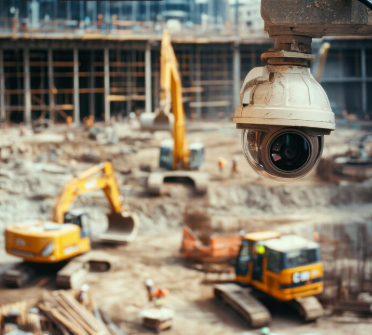
Anyone who has managed a building project knows the feeling. You leave the site at six in the evening, and by the time you get home you’re already wondering whether the concrete pour went ahead, whether the steel delivery showed up, or whether the crane crew finished what they started. Driving back every time isn’t realistic. That gap between being on site and being everywhere else is exactly what remote construction site monitoring is built to close.
At Timelapse Video Work, we’ve spent years setting up camera systems on sites across Dubai and the wider UAE. Most clients first come to us for a good-looking video at the end of the project. What they end up valuing just as much is the day-to-day visibility. This post walks through how the whole thing actually works, from the camera on the pole to the image on your phone.
What Remote Monitoring Really Means on a Construction Site
Strip away the jargon and it’s fairly simple. Cameras are installed at fixed points around your site. They take photos or record video on a set schedule, send those files over an internet connection, and store them on a secure platform you can log into from anywhere.
Traditional construction site monitoring depended on someone physically walking the site, taking notes and snapping a few photos for the weekly report. That still has its place, but it leaves big gaps. Nobody sees what happens at 2 a.m., and nobody can compare today’s slab with the one from exactly three weeks ago without digging through folders.
Remote construction site monitoring fills those gaps. The camera doesn’t get tired, doesn’t skip Fridays, and doesn’t forget which angle it used last time. Every image lands in the same frame on the same schedule, and that consistency is what makes the record so useful later.
How Timelapse Cameras Fit Into the Picture
A timelapse camera is basically a still camera with a lot of patience. Instead of recording continuous footage, it captures one high-resolution image at regular intervals, every five minutes, every fifteen, whatever suits the project. Over months, those images stack up into thousands of frames. Played back in sequence, they turn a year of building into a couple of minutes of video.
The clever part is that the same images do two jobs. While the project is live, they’re your monitoring feed. When it’s finished, they become the raw material for the final film. That’s why timelapse monitoring has become the go-to choice for developers who want both oversight and marketing content without paying for two separate systems.
Step by Step: How the System Works
1. Site Survey and Camera Planning
It starts with a visit. We walk the site, look at where the structure will rise, where the cranes will sit and how the sun moves across the plot during the day. A camera facing straight into the afternoon sun in Dubai will give you hours of glare every single day, so placement matters more than most people expect. We also check power availability and decide whether a SIM-based connection or site Wi-Fi makes more sense.
2. Choosing the Right Camera
Not every project needs the same equipment. We generally work with three types:
- IP cameras suit sites that need steady remote access and control. They’re weatherproof, low-maintenance and well suited to remote camera monitoring over long build periods.
- DSLR cameras are the pick when image quality really counts, such as flagship towers or projects where the final video will be shown to buyers and investors.
- Gigapixel cameras work best on large master-planned developments, where you want one wide shot you can zoom into and still make out detail on the far side of the site.
3. Installation and Setup
Installation usually takes a day or two. The camera housing goes up on a pole, a neighbouring building or a crane, depending on the view we’re after. We set the capture interval, test the connection and confirm the images are reaching the platform before we leave. From there, it runs on its own.
4. Images Upload Automatically
Each photo is sent to the cloud shortly after it’s taken. Nobody has to swap memory cards or copy files around. If the connection drops, the camera holds the images locally and pushes them through once it’s back online, so the record stays complete.
5. You Log In and Check Progress
This is where most clients start to see the real value. Through the online dashboard, you can open the latest image, scroll back to any date, compare two days side by side or download frames for a report. Project managers, consultants, the client’s team and even overseas investors can each have their own login. Remote construction site monitoring really does mean just that: your site on your laptop or phone, whenever you want to look.
6. Final Video Delivery
At key milestones or at handover, our editors turn the images into a polished film. We trim out the dusty days and the long stretches where nothing much changes, smooth out the transitions and add branding if you need it. That finished piece is what ends up in boardrooms, on websites and at launch events.
Why Project Teams Rely on Remote Monitoring
Put simply, remote construction site monitoring turns scattered updates into one reliable source of truth. Here’s what that looks like in practice.
Fewer site visits. A quick look at the dashboard often replaces a forty-minute drive. Over a long project, those saved hours add up quickly.
Clearer communication. When everyone is looking at the same image, “Is the fourth floor finished?” becomes a two-second question instead of a long email chain.
Evidence when you need it. Delays, disputes and insurance claims are much easier to handle with a dated visual record. We’ve had clients pull images from months back to settle arguments over when work on a section actually began.
Early warning. Spotting a stalled area or a pile-up of materials early lets you step in before it becomes a real delay.
Content that sells. Good timelapse footage shows a project at its most impressive. Developers use it in sales presentations, and contractors use it to win their next tender.
Adding CCTV for Security
Timelapse cameras are built to document progress, not to watch for intruders. On sites where expensive equipment or materials sit overnight, many clients pair them with live security cameras. Our Video Recording and CCTV Recording setups capture continuous footage, save it to both local drives and cloud backup, and can send motion alerts when something moves after hours.
Using the two together gives you complete construction site monitoring, with timelapse images for progress and live feeds for security. Both can be viewed from the same device, which keeps remote camera monitoring simple instead of leaving you juggling several apps.
Built for UAE Conditions
Equipment that works perfectly well in cooler climates often struggles here. Summer temperatures regularly climb past 45°C, and a single sandstorm can coat a lens in minutes. Our camera housings are designed with that in mind, using ventilation, sun shielding and sealed enclosures to keep things running through the hottest months. For remote construction site monitoring to be worth anything, the camera has to keep working when nobody is around to check on it, and we plan for that from the very first site visit.
Choosing the Right Setup for Your Project
The best remote construction site monitoring setup is the one that matches how your team actually works. A few questions usually help narrow it down:
- How long is the build? Longer projects benefit from IP cameras with dependable remote access.
- Is the final video a major marketing asset? If so, DSLR quality is worth the investment.
- How large is the site? Wide developments may need a gigapixel camera or several cameras placed at different points.
- Do you also need security coverage? Then it’s smarter to plan timelapse monitoring and CCTV together rather than bolting one on later.
If you’re not sure, that’s exactly what the site survey is for. We’d rather recommend one camera that covers everything you need than sell you four you’ll never look at.
Getting Started
Keeping an eye on your project shouldn’t add to your workload. The cameras should run quietly in the background, and when you want to see your site, it should simply be there. Our Construction Time Lapse Service covers everything from the first site visit to the final edited film, with timelapse monitoring running throughout the build.