
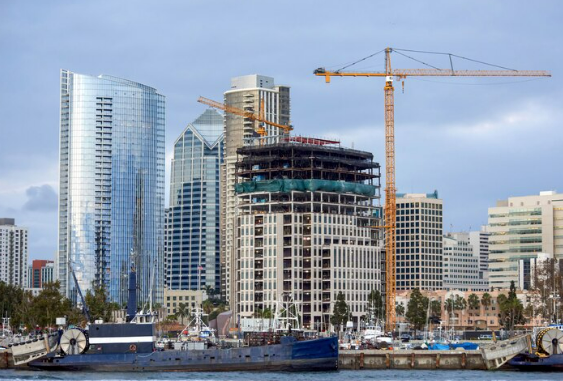
Ask any project manager working a tower in Business Bay what their week looks like and you’ll get the same answer. Site walk in the morning. Consultant meeting at eleven. Client wants a progress update by Thursday. Someone from the main contractor is arguing about who held up the slab pour in week 14, and nobody wrote anything down.
That last one is the killer. Big jobs in Dubai run for two, three, sometimes four years. Memory doesn’t hold up over that stretch. Photos on someone’s phone don’t either.
A construction timelapse fixes that quietly, in the background, without anyone having to remember to do it. Below are ten reasons developers and contractors across the UAE keep asking for one.
1. Progress You Can Actually Prove
Reports say a floor was poured. A construction timelapse shows it happening, with a date stamp, from a fixed angle that never moves.
That difference matters more than people expect. When your camera captures the same frame every fifteen minutes for eighteen months, you end up with a visual record nobody can argue with. Not an opinion. Not a summary written after the fact. Just what happened, in order.
2. Fewer Site Visits for People Who Don’t Have Time for Them
Directors, investors, overseas partners — none of them are driving out to Dubai South at seven in the morning to look at rebar.
With a proper time lapse for construction sites setup, they don’t have to. They log in, they look, they close the tab. One of our clients has a stakeholder in London who checks the site with his coffee every Monday. He’s never once been on the ground.
3. Delay Claims Get Settled Without a Fight
This is the benefit nobody thinks about until they need it.
Extension of time claims on large UAE projects can drag on for months. Two parties, two versions of events, no evidence. Then somebody pulls the construction timelapse archive and scrubs back to the date in question, and the whole conversation ends in about four minutes.
We had a contractor pull footage from eleven months earlier to show a crane had been sitting idle because of an access issue outside their scope. That clip was worth more than the camera cost.
4. Investors Stay Calm
Money gets nervous when it can’t see anything.
A short time lapse building construction clip sent out with the quarterly update does more to settle a board than fourteen pages of narrative. They watch the steel go up. They see the facade close in. They stop calling as often.
5. Marketing Content You Didn’t Have to Budget For
Here’s the part the marketing team loves. Every image the camera takes is also raw material.
The same construction timelapse that documents your build becomes the video on the launch page, the loop playing on the screen at the sales centre, the LinkedIn post that gets shared around the industry. Property developers in Dubai are using these clips in sales presentations before the building is even topped out.
You paid for documentation. You got a marketing asset thrown in.
6. Safety and Site Behaviour Improve
People work differently when they know the site is being watched. That’s not a complaint, it’s just how it goes.
Pair the cameras with proper Video Recording and CCTV Recording coverage and you get two things at once: a progress archive and a genuine security layer. Trespassers, unsafe practices, material theft over the weekend — all of it is on record, and most of it stops happening once word gets around that the cameras are live.
7. Coordination Across Subcontractors Gets Easier
Big sites have a lot of trades stepping on each other.
Reviewing time lapse for construction sites footage in a weekly coordination meeting sounds like a small thing, but it changes how those meetings run. Instead of three people describing the same bottleneck differently, everyone watches the same thirty seconds and moves on to fixing it.
8. The Record Survives Your Team
Staff turnover on a four-year project is a fact of life. The QS leaves. The site engineer moves to another developer. Their knowledge walks out with them.
A construction timelapse archive doesn’t leave. Two years after handover, when a facility manager asks what’s behind a particular wall or when a waterproofing layer went down, the footage is still sitting there, organised by date.
9. Handover Day Gets a Story Worth Telling
There’s a reason clients play these videos at opening ceremonies.
Three years of work compressed into ninety seconds hits people. The excavation, the piling rigs, the core climbing floor by floor, the cladding wrapping around it. A well-edited time lapse building construction sequence gives everyone in the room a sense of the scale of what they just built. Reports never do that.
10. It Costs Less Than the Problems It Prevents
Set against the budget of a large-scale Dubai project, a construction timelapse installation is a rounding error. One avoided dispute, one faster claim resolution, one marketing video you didn’t have to commission separately — and it’s paid for itself several times over.
That’s before you count the hours your team gets back from not driving across the city to check on a pour.
What This Looks Like on a Real Dubai Site
The heat and the dust are the whole problem here. Standard camera housings don’t last through a Dubai summer, and a sandstorm in March will finish off anything that isn’t sealed properly.
Our equipment is built locally for exactly that reason. A typical Construction Time Lapse Service starts with a site visit — an hour, usually — to work out sightlines and figure out where the building will actually rise in the frame. Then installation, then the system runs on its own. Solar and 4G where there’s no power or network, which on early-stage sites is most of the time.
You get a login. Images upload automatically. Nobody on your team has to touch anything.
For very large developments we’ll often run more than one camera: a wide gigapixel unit for the overall time lapse for construction sites view, plus a DSLR at closer range for the detail shots that end up in the marketing cut. Occasional drone passes fill in the aerial context.
A Few Questions We Get Asked
How often should the camera fire? Depends on the programme. A two-year tower doesn’t need an image every minute. We usually land between ten and twenty minutes, adjusted once we see how fast the structure is moving.
What happens if the site loses power? Nothing. Solar with battery backup keeps running through outages.
Can we get footage mid-project, not just at the end? Yes, and most clients do. Milestone edits at topping out, at facade completion, whenever you need something for a presentation. The full time lapse building construction video comes at handover.
Ready to Document Your Project?
If you’re starting a large-scale build anywhere in the UAE, the cheapest time to install is now, before the excavation. Once the substructure is in, you’ve already lost the part of the video everyone finds most impressive.
Come talk to us about what your site needs. We’ll come out, take a look, and tell you honestly what setup makes sense.