
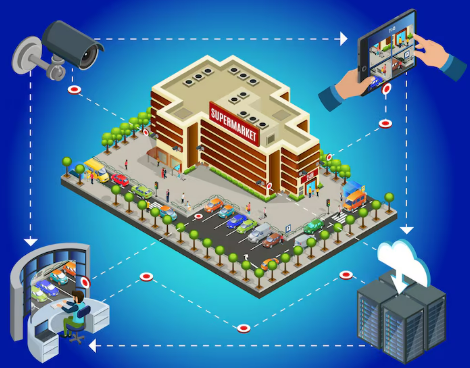
Most business owners treat long-term visual documentation as a tool exclusive to hardhats and structural steel. They assume that if you are not pouring concrete or erecting a skyscraper, you have no practical use for a continuous, frame-by-frame archival system. It is a costly blind spot that ignores how modern operations actually run.
The reality of running a high-stakes business in 2026 is that human memory is a terrible asset protection strategy, and standard security feeds are useless for process optimization. Progressive sectors outside of the building trades are quietly adopting industrial-grade visual tracking to fix operational leaks, settle vendor disputes, and verify complex workflows. They are using professional timelapse video services to capture months of subtle, incremental activity and compress it into actionable operational data. If you think your industry does not need this level of scrutiny, you are likely losing money to inefficiencies you cannot see.
The Misconception of the Single-Use Camera
The biggest hurdle for most executives is moving past the idea that a visual archive is just a marketing asset. They view it as a luxury line item meant to produce a glossy video for the annual stakeholder meeting. While a professional time lapse video company can certainly deliver a polished final product, the day-to-day operational utility is where the real investment is recovered.
Surveillance systems are usually good at catching people who steal or damage things. They are really bad at keeping track of changes that happen over a long time like when stores change what they have in stock during different seasons or when they have to plan for big events. A good surveillance system takes quality pictures at regular times so it can show small problems like waste, delays or damage to buildings very clearly. Surveillance systems like this can really help because they take pictures that cannot be changed so you can see surveillance system problems like waste or delays clearly in the pictures, from the surveillance system.
Security cameras watch for criminals; timelapse services watch for operational rot.
When you shift your perspective from simple security to comprehensive operational logging, the applications become obvious. The same hardware that tracks a foundation pour can protect a logistics hub, a shipyard, or a massive public infrastructure project.
Mega-Events and Corporate Fit-Out Logistics
The event management sector works under tight deadlines. They often build temporary cities in just a few days. For example if you are organizing an international exhibition or a big stadium concert, a single problem with logistics can cost a lot of money. Hundreds of thousands of dollars. In penalties for using the venue late. The event management sector operates under timelines. It builds cities quickly. Managing setup for an exhibition or concert is a big task. A logistical issue can be costly. It can cost hundreds of thousands of dollars. The event management sector has deadlines. It often builds cities fast. A single logistical bottleneck can cost a lot. The event management sector faces timelines. It builds cities quickly for events. A logistical problem can cost hundreds of thousands. The event management sector works with schedules. It constructs cities in days. A logistical issue is costly for events. The event management sector operates on timelines and builds temporary cities quickly. If there is a problem with logistics for an event it can cost hundreds of thousands of dollars. The event management sector has tight timelines. The sector builds cities in a short time. For an international exhibition or major stadium concert logistical problems can cost a lot. The event management sector works under timelines and builds temporary cities fast. The sector manages events like exhibitions and concerts. A logistical bottleneck can cost hundreds of thousands. The event management sector operates with deadlines. The sector builds cities quickly for events. The event management sector faces tight timelines. It builds cities for events in a time. The sector manages setup, for events. A single logistical issue can be very costly. The event management sector works under schedules. The sector constructs cities fast. The event management sector has timelines. It builds cities quickly. The sector manages international exhibitions and concerts. A logistical problem can cost a lot of money.
Organizers are now employing a construction time lapse company to oversee these temporary builds, treating the exhibition hall exactly like a high-speed jobsite. By tracking the movement of rigging crews, AV installers, and heavy machinery, project directors can spot exactly where the staging pipeline stalls. If the lighting crew is delayed because the flooring team ran over their allotted slot, the visual record provides immediate clarification.
| Operational Factor | Standard CCTV | Professional Timelapse |
| Frame Resolution | Low (Compressed 1080p) | Ultra-HD (Up to 8K Stills) |
| Data Retrievability | Difficult (Overwrites quickly) | Instant (Cloud-indexed) |
| Analytical Value | Low (Real-time monitoring only) | High (Long-term process auditing) |
A major convention center in a tier-one hub recently faced a massive billing dispute with an international exhibitor who claimed their custom pavilion was not accessible during the scheduled setup window. The venue management team pulled the archive from their internal Video Recording and CCTV Recording systems, supplemented by the dedicated stream from their contracted time lapse video company. The high-resolution frames proved the pavilion was clear, but the exhibitor’s third-party logistics provider had simply left the materials sitting at the loading dock for twelve hours. The venue saved fifty thousand dollars in disputed fees within an afternoon.
Heavy Manufacturing and Shipyard Operations
In precision manufacturing and maritime assembly, components move slowly, but the financial stakes are massive. When an aerospace facility or a shipyard is fabricating a vessel over twelve months, tracking manual assembly sequences is notoriously difficult.
Industrial operators use timelapse video services to audit their assembly floors and dry docks. A shipyard supervisor cannot stand over a hull fabrication team for eight months to ensure optimal staging of structural plates and welding teams. However, analyzing a compressed visual record allows management to see that material handling cranes are sitting idle 6 to 8 times more than necessary due to poor floor layout.
If you can compress a six-month manufacturing process into six minutes, every single layout error becomes glaringly obvious.
This visual ledger changes how quality control audits are handled. If a structural weld fails a stress test three months into assembly, engineers do not have to guess at the cause. They can isolate the exact date and hour of fabrication, review the environmental conditions, check the visible compliance steps, and address the root cause without halting the entire line.
Agriculture, Environmental Monitoring, and Land Reclamation
Large-scale commercial farming and environmental engineering firms face variables that traditional businesses never encounter, primarily the slow, unpredictable impact of nature. For these sectors, the changes occur too gradually for the human eye to track effectively from week to week.
Big farms that grow a lot of food use video services to see how their crops are doing. These services take pictures of the fields over time. The farmers want to know if the soil is getting worn away and if the water is being used in the way. They put cameras on tall towers, in the fields. These cameras are powered by the sun. The farmers can watch the fields for a time like six months to see how the crops respond to different kinds of fertilizer and water. They can see if the crops are growing well and if the water is being used in the way.
The same idea works for projects that change the land or protect the coast. If your company is working to make a beach stronger or watching a pool at a mine you need to see what is happening over a long time. Working with a company that does construction time lapse photography is helpful. They can give you a camera system that works outside in weather and does not need to be plugged in. This system can watch the land and water for years. Give you important information that you might not get from just looking at sensor readings. The construction time lapse company can help you get the information you need to understand what is happening with the land and water over time like changes in the beach or the water levels in the pool, at the mine.
Retail Optimization and Large-Scale Inventory Staging
For major distribution centers and regional retail hubs, space is the most valuable commodity on the balance sheet. Mismanaging how inventory moves through a warehouse during peak seasons leads to compounding labor costs and delayed shipments.
Operations managers are deploying timelapse video services inside fulfillment centers during major inventory overhauls. Watching a facility operate 6 to 8 times faster through a compressed visual timeline highlights bottlenecks that look like standard activity in real time. You might notice that forklifts are consistently bottlenecking at a specific aisle intersection, or that the breakdown of inbound pallets is taking twice as long on Wednesday shifts due to poor staging placement.
A regional logistics provider utilized these specialized timelapse video services to redesign their entire cross-docking protocol. The resulting data allowed them to spot a systemic flaw in how third-party delivery trucks were queuing at their bays, leading to a complete restructuring of their morning arrival slots. They reduced their average turnaround time significantly, all because they looked at their floor traffic through a macro lens.
Frequently Asked Questions
Why can’t I just use my existing security cameras for long-term project tracking?
Security cameras are really good, at sending video all the time. The video is not very clear. They usually record over footage after thirty days to make space on the server. Security cameras do not take sharp pictures so you cannot zoom in on small things that happened a long time ago. Security cameras also do not put the pictures in order to make a timeline that you can look at and understand.
How do these cameras handle remote locations without power or internet connectivity?
Professional providers deploy self-sustaining systems equipped with industrial solar panels and internal battery backups. Data is transmitted via secure cellular networks directly to the cloud, allowing the hardware to operate completely independent of local site infrastructure.
How often are images captured for non-construction industrial projects?
The capture frequency is customized to the speed of the operation. A fast-moving logistics fulfillment center might require an image every sixty seconds, while an environmental monitoring project tracking a landfill or a coastal site might only need a frame every thirty minutes.
Are these systems compliant with privacy regulations for workers on the floor?
Yes, reputable providers can implement automated masking filters that blur faces or specific sensitive areas directly on the edge device before the images are uploaded to the cloud archive, ensuring operational transparency without violating privacy laws.
What happens if a camera gets dirty or covered in dust in an industrial environment?
Industrial-grade setups feature ruggedized housings with specialized coatings that repel water and dust. Additionally, professional service packages include proactive maintenance schedules and remote monitoring alerts that notify technicians the moment image clarity drops.
The choice to deploy professional visual logging is ultimately an exercise in operational control. Relying on guesswork, scattered daily logs, and basic surveillance feeds leaves your business vulnerable to hidden inefficiencies and costly disputes. Employing dedicated timelapse video services gives you an uneditable, high-definition truth engine that protects your investments and refines your processes long after the work is done.